

Standard Taping Machines in Madhya Pradesh
Introduction
Lynopack is a Make in India engineering company delivering advanced packaging automation and material handling solutions designed for performance, durability, and efficiency. With strong in-house research and development, we create reliable, sustainable, and user-friendly systems that meet modern industrial demands.
In today’s competitive manufacturing and packaging industry, businesses need fast, reliable, and efficient packaging solutions. Proper carton sealing is an important part of the packaging process because it protects products during storage, handling, and transportation. A Standard Taping Machines in Madhya Pradesh solution can help industries improve packaging speed, maintain consistency, and reduce manual effort. We are the best Standard Taping Machines Manufacturer.
Lynopack offers dependable packaging machinery designed to meet the requirements of different industries. With practical designs, efficient operation, and a focus on productivity, Lynopack provides suitable packaging solutions for businesses looking to improve their carton sealing process.
What Are Standard Taping Machines
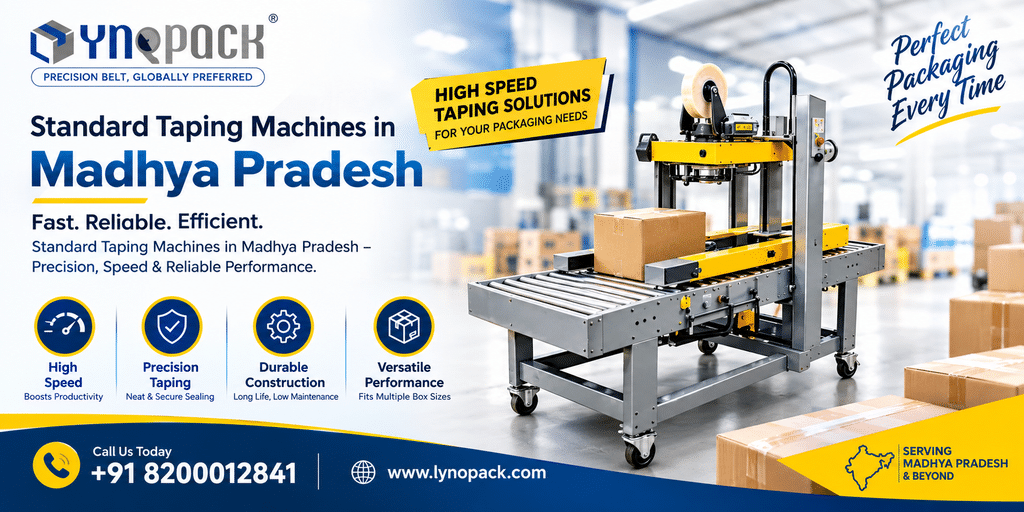
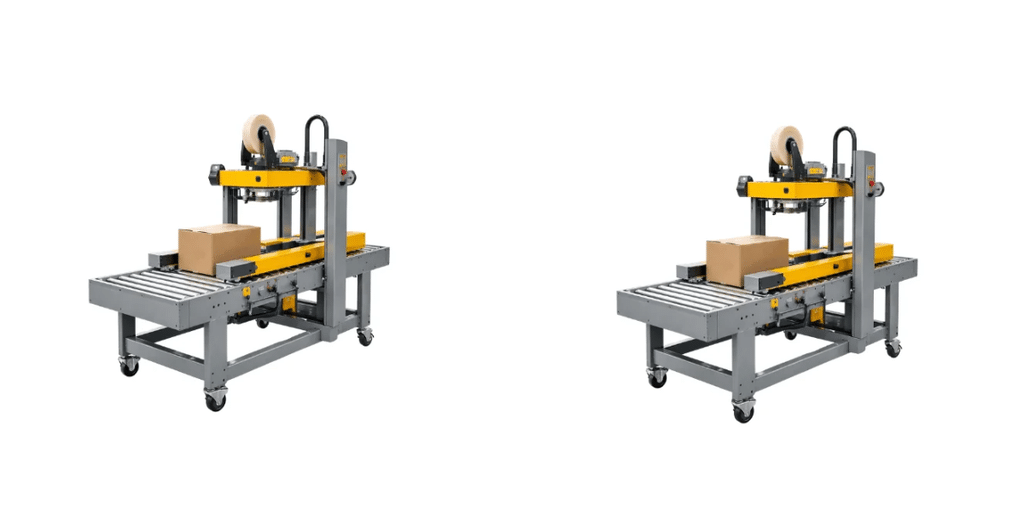
Standard taping machines are packaging machines used to seal the top and bottom flaps of cartons with adhesive tape. Instead of manually folding the carton flaps and applying tape, the machine performs the sealing process in a quick and consistent manner. We are the best Standard Taping Machines Supplier.
These machines are suitable for companies that regularly pack products in corrugated boxes. They can be used in manufacturing units, warehouses, logistics operations, food processing facilities, pharmaceutical industries, consumer goods companies, and many other sectors. A standard taping machine can reduce repetitive manual work and help maintain uniform sealing quality across a large number of cartons.
Why Are Taping Machines Important for Modern Packaging?
- Packaging is not only about putting a product inside a box. The carton must also be properly closed and sealed before it reaches the customer. Weak or inconsistent sealing can create problems during transportation and handling.
- Faster carton sealing
- Consistent tape application
- Reduced manual effort
- Better packaging appearance
- Improved productivity
- Efficient use of packaging materials
- Suitable for continuous packaging operations
- Manual carton sealing can take considerable time when a company has a high daily packaging volume. Workers may also apply different amounts of tape or seal cartons unevenly. A taping machine provides a more consistent approach.
Applications of Standard Taping Machines
1. Food and Beverage Packaging
- Standard Taping Machines are commonly used for sealing cartons containing food products, packaged snacks, beverages, edible products, and other FMCG items. A consistent tape seal helps keep cartons closed during handling and transportation. Automated case sealing is used across food and beverage packaging operations where efficient end-of-line packaging is important.
2. Pharmaceutical Packaging
- Pharmaceutical manufacturers and distributors use carton taping machines for sealing secondary packaging. Medicines, healthcare products, medical supplies, and related items can be packed into corrugated cartons before transportation. Consistent sealing is particularly useful where a large number of cartons must be processed with similar packaging standards.
3. E-Commerce Packaging
- The growth of online shopping has increased the requirement for efficient carton sealing. E-commerce warehouses handle many different products and box sizes, making reliable and fast sealing important. Standard Taping Machines can help seal outgoing cartons before they move toward labelling, sorting, storage, or dispatch. Case sealing equipment is also used in e-commerce and distribution environments.
4. Textile Industry
- Textile manufacturers and garment companies use corrugated cartons to pack clothes, fabrics, home textiles, and finished products. Taping machines can be used to seal these cartons after products have been packed. The machine provides a uniform sealing process and can help improve the appearance of cartons ready for dispatch.
5. Electronics and Electrical Products
- Electronic products often require secure outer packaging during transportation. Standard Taping Machines can be used for sealing cartons containing electrical components, appliances, accessories, cables, and other electronic products. Industrial case sealers are specifically used in electronics and manufacturing applications.
6. Automotive and Engineering Industries
- Automotive component manufacturers and engineering companies regularly ship parts in corrugated boxes and industrial cartons. Taping machines can seal cartons containing components, spare parts, hardware, tools, and other manufactured products. For high-volume operations, automated sealing can become part of a continuous packaging line.
7. Logistics and Warehousing
- Warehouses and logistics centres process a large number of cartons every day. Manual taping can become repetitive and time-consuming when packaging volumes increase. A Standard Taping Machine can help streamline the carton sealing stage before boxes are moved for sorting, palletising, transportation, or delivery. Industrial taping machines are designed for manufacturing units, warehouses, logistics hubs, and packaging plants.
8. FMCG Product Packaging
- Fast-moving consumer goods companies require efficient packaging because large quantities of products may need to be packed and dispatched every day. Taping machines can seal cartons containing household products, personal-care products, packaged goods, and other consumer items. Consistent top and bottom sealing can provide a uniform finish across large production batches.
9. Retail and Distribution Centres
- Retail distribution centres receive and dispatch products in cartons of different sizes. Taping machines can support the final packaging stage by securely closing cartons before transportation. Depending on the machine design, adjustable or random carton sealing systems can accommodate different carton dimensions.
10. Industrial Packaging
- Industrial manufacturers use taping machines for a wide variety of products that require corrugated carton packaging. These may include machinery components, hardware, tools, industrial accessories, and finished products. Machines with top-and-bottom taping capabilities are particularly useful when both carton seams need to be sealed efficiently.
Benefits of Standard Taping Machines
1. Faster Carton Sealing
- One of the biggest benefits of a standard taping machine is improved packaging speed. Manual taping requires an operator to position the carton, fold the flaps, apply tape, cut it, and move the sealed box. A taping machine performs much of this process mechanically, allowing more cartons to be sealed within a given working period. This is especially helpful for manufacturing and distribution businesses in Madhya Pradesh that handle large numbers of cartons every day. Faster sealing can help reduce packaging bottlenecks and support smoother dispatch operations.
2. Consistent Sealing Quality
- Manual taping can result in differences in tape position, length, pressure, and finishing. Standard taping machines are designed to apply tape in a controlled and consistent manner. Consistent sealing helps create a uniform appearance across cartons and can provide more reliable closure during storage, handling, and transportation. This is particularly important for businesses where packaging quality is part of their overall product presentation.
3. Reduces Manual Labour
- A standard taping machine can reduce the amount of repetitive manual work involved in carton sealing. Depending on the machine configuration, operators may only need to feed cartons, monitor the machine, and perform basic adjustments. Reducing repetitive taping tasks allows workers to spend more time on quality inspection, material handling, production support, and other important activities. This can make better use of available manpower in a packaging facility.
4. Better Productivity
- Automation can help businesses maintain a more continuous packaging workflow. Instead of stopping frequently for manual taping, cartons can move through the sealing process in a systematic manner. Standard taping machines can also be incorporated with conveyors and other packaging equipment, helping businesses develop a more organised end-of-line packaging system.
5. Reduced Tape Wastage
- Manual taping may sometimes use more tape than necessary because of inconsistent cutting or overlapping. A machine applies and cuts tape according to its operating settings, helping maintain greater consistency in tape consumption. For companies sealing hundreds or thousands of cartons, even small improvements in tape usage can contribute to better control over packaging material costs.
6. Strong and Secure Carton Sealing
- Proper carton sealing is important for protecting products during storage and transportation. A standard taping machine applies adhesive tape along the carton seam in a controlled way, helping maintain a secure closure. Secure sealing is particularly useful for products that travel through warehouses, distribution centres, transport vehicles, and multiple handling stages before reaching customers.
7. Professional Packaging Appearance
- Uniformly sealed cartons create a cleaner and more professional appearance. This can be valuable for businesses supplying products to retailers, distributors, e-commerce customers, and other commercial buyers. Straight and consistent tape application also helps maintain a standardised packaging presentation across large production batches.
8. Suitable for Different Industries
- Standard taping machines can support packaging requirements across many industries. They are used in manufacturing, food and beverage, pharmaceuticals, electronics, retail, logistics, e-commerce, and distribution operations. In Madhya Pradesh, such machines can be useful for businesses involved in industrial production, consumer goods, agricultural products, warehouses, and distribution activities where corrugated cartons are regularly used.
9. Less Operator Fatigue
- Repeatedly folding carton flaps, handling tape dispensers, cutting tape, and moving boxes can create physical strain when performed continuously. Automating the taping process can reduce these repetitive activities. This allows operators to focus more on machine monitoring and other packaging responsibilities rather than performing the same manual sealing movement throughout the shift.
10. Easy Integration with Packaging Lines
- A standard taping machine can be used as a standalone unit or integrated with other packaging equipment. Depending on the production setup, it can work alongside conveyors, carton erectors, coding systems, checkweighing equipment, strapping machines, and other end-of-line systems. This flexibility makes taping machines suitable for businesses that want to gradually improve their packaging automation.
Why Choose Lynopack
1. Consistent Taping Quality
- One of the main reasons industries choose standard taping machines is their ability to provide uniform taping. The machine maintains controlled tension and proper material placement, helping create neat and consistent tape layers. This is especially useful when products require accurate insulation or protective covering.
2. Improved Production Efficiency
- Manual taping can take considerable time and may produce inconsistent results. Standard taping machines automate the process and allow manufacturers to complete more work in less time. Faster production can help businesses handle larger orders while maintaining a consistent workflow.
3. Easy to Operate
- Modern standard taping machines are designed with practical controls and user-friendly operating systems. Operators can learn the basic functions without requiring complicated training. Simple operation also helps reduce downtime caused by operating errors.
4. Suitable for Different Industries
- Standard Taping Machines in Madhya Pradesh can be used across various industrial sectors. Depending on the machine design and configuration, they may be suitable for cable manufacturing, electrical components, wire processing, insulation applications, packaging, and other industrial processes.
5. Better Material Control
- Proper control of tape tension and application is essential for achieving good results. Standard taping machines provide controlled movement of the tape during operation, helping minimise problems such as loose wrapping, uneven layers, overlapping issues, or material wastage.
6. Reduced Manual Labour
- Automating repetitive taping work can reduce dependence on manual operations. Workers can focus on machine monitoring, quality inspection, material handling, and other productive activities. This can improve overall workplace efficiency.
7. Reliable Machine Construction
- Industrial taping machines are generally built with durable components to withstand regular production use. A properly selected and maintained machine can provide dependable performance over an extended operating period.
8. Reduced Material Wastage
- Accurate tape application helps manufacturers use the required quantity of material more effectively. Controlled tape feeding and tension can reduce unnecessary overlaps and wastage, which may help improve production economics.
9. Better Product Appearance
- Uniform taping gives finished products a cleaner and more professional appearance. For applications where the quality of wrapping or insulation is visible, consistent machine operation can contribute to better product presentation.
10. Supports Large-Scale Production
- Industries in Madhya Pradesh involved in regular or high-volume manufacturing can benefit from automated taping equipment. Machines can help maintain a steady production cycle and provide repeatable results across multiple batches.
11. Easy Maintenance
- A good industrial taping machine should be designed for practical maintenance. Easily accessible components, proper cleaning, regular lubrication where required, and timely inspection can help maintain machine performance and minimise unexpected downtime.
How to Select the Right Standard Taping Machine
Before purchasing a taping machine, businesses should evaluate their packaging requirements carefully. First, consider the size and weight of the cartons being handled. The machine should be suitable for the carton dimensions used in your facility.
Next, check the required packaging speed. A business with a high production volume may require a machine designed for continuous operation. It is also important to consider the type of adhesive tape used for carton sealing. The machine should be compatible with the required tape specifications.
The available floor space, operating environment, maintenance requirements, and ease of adjustment should also be considered. A suitable machine can provide better long-term value when it matches the actual requirements of the packaging line.
Standard Taping Machines for Growing Businesses
As businesses expand, manual packaging methods can become difficult to manage. Increasing order volumes require faster and more organised packaging processes.
A standard taping machine can be integrated into a packaging workflow to improve carton sealing efficiency. For businesses in Madhya Pradesh, this can be useful across manufacturing hubs, warehouses, distribution centres, and other industrial facilities.
Automation does not simply mean increasing speed. It also helps create a more standardised packaging process, which is important when a company wants to maintain consistent output.
Conclusion
A reliable carton sealing system can make a significant difference to packaging productivity. Standard Taping Machines in Madhya Pradesh are useful for businesses that want to reduce manual sealing work, improve consistency, and support faster packaging operations. We are the best Standard Taping Machines Exporter.
Lynopack is a good option for companies seeking reliable taping equipment because of its useful packaging solutions and emphasis on industrial needs. These devices can assist a variety of packaging applications, including manufacturing, food processing, e-commerce, retail, logistics, and warehousing.